Can't Let Go

Archive

A visual guide & personal exploration.

Hoarding

The word hoard comes from the Old English hord: treasure.

In Proto-Germanic, the word meant hidden treasure.

For most of history, hoarding meant hoarding wealth. King Midas had his gold. Dante put the tight-fisted in the fourth circle of hell. Piling up ordinary, low-value things is mostly a feature of the last century or so.

Source: [1], [4]

Woodrats [commonly known as packrats] are especially fond of small, bright, shiny objects, which they will readily confiscate, but bones, cow chips, and bits of wood are all common.

Source: [1], [4]

My mom’s oldest friend: “My stepson, he keeps stuff, he’s sort of a pack-rat, like your mom, not as bad though.”

This was the first time I heard someone directly speak to my mom’s hoarding and have her respond non-defensively. Perhaps like a scared animal, she stayed completely still until she felt safe to move again.

Diagnostics

In 2013, the American Psychiatric Association adopted hoarding as one of its new disorders, including it in the fifth edition of the Diagnostic and Statistical Manual of Mental Disorders (DSM-5). The World Health Organization’s ICD-11 also includes hoarding disorder as a new diagnosis.

Before these additions, hoarding was considered an infrequent symptom of obsessive-compulsive disorder (OCD) or of obsessive-compulsive personality disorder (OCPD).

Neither designation fits what has been discovered over the last three decades about this behavior.

Source: [1]

3

features characterize the complexity of hoarding symptoms

excessive acquisition,

difficulty discarding or letting go of possessions,

and cluttered living spaces.

Source: Frost & Hartl 1996 [2], via [1]

In 1890, the psychologist William James suggested that accumulated possessions contribute to our sense of self: a sort of fusing of self with our possesions.

Source: James 1890, pp. 291–292, via [1]; [4]

My mom’s most benign and intentional collection is of collect single-use kitchen tools.

things like avocado pit removers

things like hard boiled egg slicers

heart-shaped waffle makers, corn-cob skewers, garlic peelers…

Things that could be helpful if used. We never use them. They remain stacked in cabinets so tightly they can’t be pulled out, and there is no counter space on which they could be used. 

These items appeal for many reasons. They’re cheap. They’re often for sale at somewhere like the 99-cent store (RIP) or Walmart with a red “As Seen on TV” label. They’re cute and small, on their own, each doesn’t seem like it would take up much space. They promise something too…ease, community meals, abundance, connection, having a tool for everything.

Can items represent hope?
Our dreams?
Who we are?

What does it mean to possess?
To be possessed?

Hoarding of food is most often seen in those who have experienced starvation.

In a 2004 study, 25 Holocaust survivors in South Florida described how the experience shaped their relationship to food. The effects they reported included difficulty throwing food away, even when spoiled, storing excess food, and anxiety when food isn’t readily available.

Researchers have found possible links between hoarding and PTSD among Holocaust survivors. Hoarding that begins late in life is often tied to loss or trauma.

Source: [13], [14], [4]

When is uncertainty is intrinsically linked with loss?

What can make loss intolerable?

What makes letting go feel like grief?

"You know I'm only this way because of my mother, right?"

"Yes, Momma. Of course I do."

The biggest fight in my family is about food

My mom is unwilling to get rid of food that could still be good. That includes cans from the 1980s, and dried goods that could provide an extensive history of Trader Joe’s, Manischewitz, and Campbell’s branding.

(Hover over the label.)

"You know it's because of you the house is like this. I laid out all my papers to teach you how to sort… and you never did it. You wanted to hang out with friends… and now it's out of control."

"My mom sent me to camp, and I was ruthlessly bullied the whole time. I came back, and her and my dad had moved. They got rid of all my stuff, all your aunt's stuff… When I asked why, she said, 'I lost everything I owned when the Russians came, and then again with the Nazis. You're fine. I take care of you. They were my things anyway.'"

Hoarding as a lack of faith in others.

An avoidant attachment strategy, in which we must provide, endlessly, for ourselves.

What do we own?

In Sapiens, Yuval Noah Harari talks about quantities owned over a lifetime.

“Foragers… moved every month, every week, and sometimes even every day…the vast majority of people owned no more than a few dozen items over the course of their entire lives, and these were strictly functional artifacts.”

Source: [6]

Now we own hundreds of thousands. Each bottle we use, napkin we throw away, shirt we donate, is another item we have possessed as our own.

“An average individual from a modern affluent society owns several hundred thousand separate items—from cars and houses to disposable nappies and milk cartons. There is hardly any product, process or emotion that does not depend on artifacts.”

Source: [6]

"Dad, was Mom's mom a hoarder like she is?"

"Hmm… here and there, she was, but not as bad as your mom. You know she tried to get me killed one time? She told me to throw out all your mother's stuff while she was out of town. I thought about it, even called a dumpster… and then I realized she'd come back and she'd kill me!"

Hoarding runs in families.
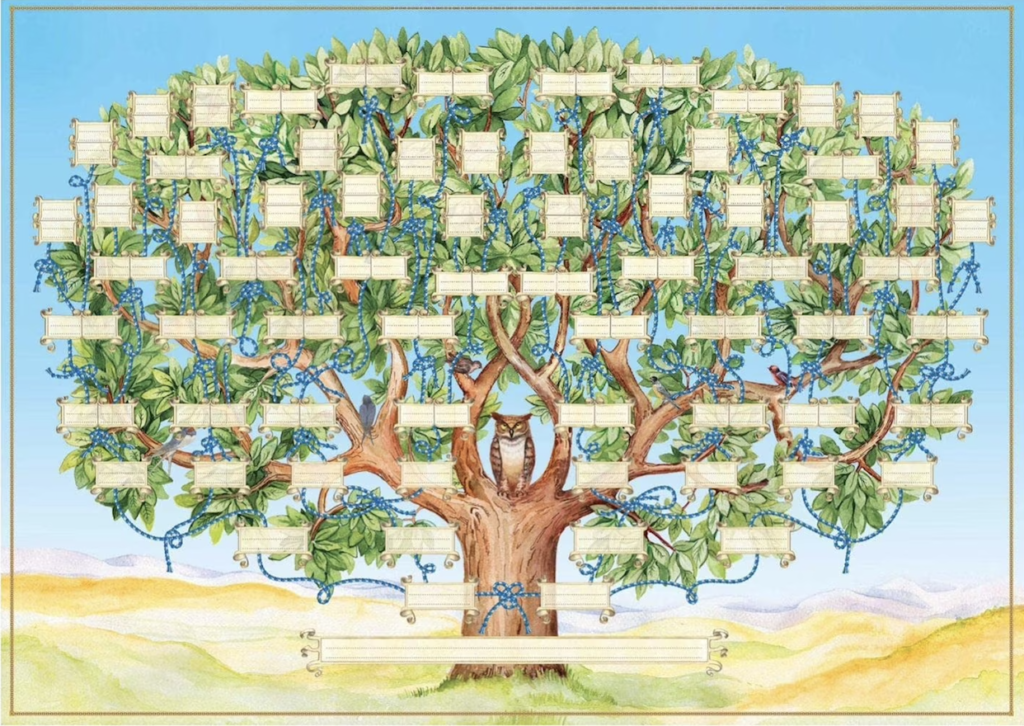
In their study, Randy Frost and Gail Steketee found that more than 80 percent of their subjects reported a close relative with similar problems.

Hoarding may be inherited, a way of processing information, or an intense sensitivity to the details and history of objects. Maybe learned maybe lived. 

Source: [18], via [4]

What belongs to me?
What belongs to my mother?
To my mother's mother?

Is this even mine to give away? Mind to hold on to?
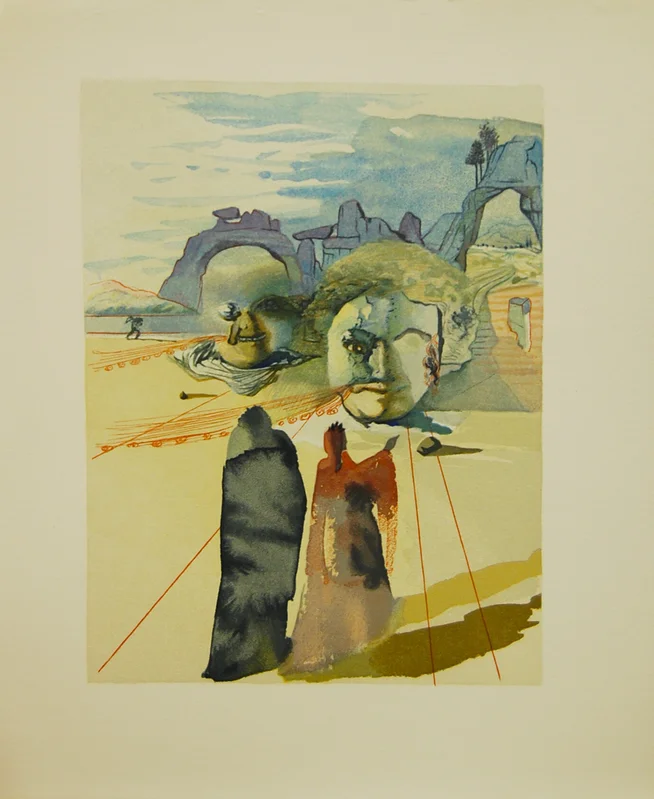
In the 1300s, Dante Alighieri referred to hoarding in the Inferno.

Dante is led through the nine circles of hell by his guide, the shade Virgil. When they enter the fourth circle, they see two groups at war, heaving great stones against each other with their chests, overseen by Plutus, the god of wealth.

Virgil explains that these are the hoarders and the wasters: Avarice and Prodigality. They spent their lives pursuing wealth and failed to use it with moderation. By doing so, they became blind to the real value of possessions, and were shielded from God’s light.

As punishment, they are doomed to battle forever. One group crashes against the other with the cry:

Why do you hoard?”

and the other answers:

“Why do you waste?”

Their possessions become the heavy stones they are forced to heave for eternity.

Source: Ciardi 1954, via [1]

"It's wasteful for you to leave the napkins on the table… you should take them with you. You never ever have enough napkins."

(for context…she has boxes and boxes filled with napkins from restaurants)

What do I gain from wielding this at her?


What am I storing myself?

"Momma, I'm not trying to make you feel attacked I'm sorry... I just want you to feel free."

Diagnostics

Diagnosis of course, changes over time, as does popular understanding. 

The DSM-5, the same one which introduced hoarding, included a change from Gender Identity Disorder to Gender Dysphoria. Through this, transness itself is no longer the disorder. Related distress can be treated, but not transness itself.

This same DSM version began to take cultural background into account in how a person’s case is understood.

“Disorder” is revised over time. It is shaped culture. 

Source: [5]

In the middle of the twentieth century, the philosopher Erich Fromm developed a theory of character in which acquiring and saving possessions played a central role.

He believed that acquiring things was a way for people to connect with the world around them and with each other. But when acquiring and saving were done in excess, they became a hoarding orientation, one of four types of nonproductive character. For these people, collecting and saving were necessary in order to feel secure.

Fromm named two ways of relating to the world: having and being.

A having-oriented person derives meaning from collecting and saving possessions. A being-oriented person derives meaning from experiences rather than possessions.

Fromm believed the having orientation was a dangerous form of avarice, and the most destructive form of human existence.

Source: Fromm 1947, via [1]

Now, items are made across the world and delivered to our homes nightly.

We spend hours scrolling through media that tells us more, more,

Machines built to feed desire. 

The historian Daniel Lord Smail points out that hoarding for survival is ancient. Monkeys, crows, and honeybees do it. But the compulsive hoarding of useless things, he notes, seems to belong to only the last century or two, and mostly the last few decades. 

Something in our history and culture changed.

Source: [4], [17]

"The ubiquity of hoarding in the twenty-first century is due in some part to the unprecedented availability of cheap consumer goods...

Deregulation has enabled further alienation of value from material forms by stimulating investment in derivative financial markets. "

– Rebecca Falkoff
Source: [10]

 But there is a deeper tension, between things we can hold and value that can't be held.

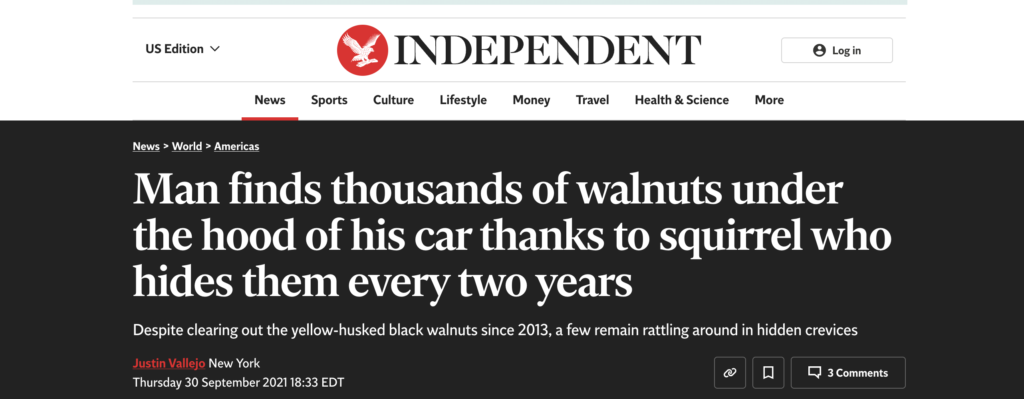
Other animals, of course, hoard too.
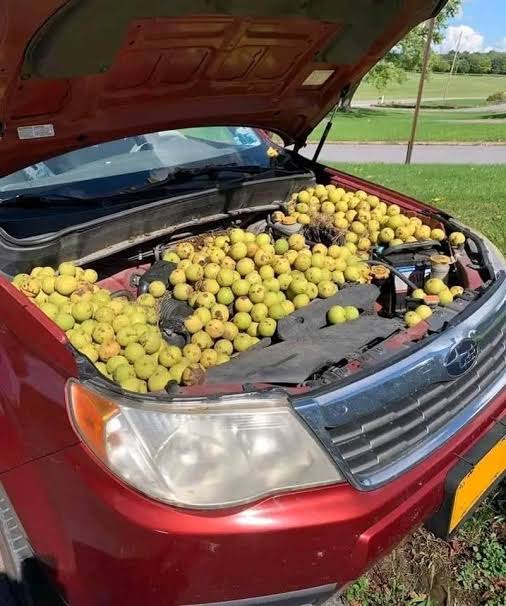
Red squirrels are regular hoarders, found throughout Michigan. They are the greatest creators of large caches, or “middens,” of pine cones and other seeds in hidden places. They are small and energetic, rusty red with white underbellies, and noisy, often sounding like a squeaky wheel in the trees.

Gray squirrels practice “scatter hoarding”: burying or stashing small amounts of seed in various locations within their territories. They rely on their sense of smell to recover what they’ve stored, but they don’t always end up claiming everything.

The seeds of many tree species, including oaks, walnuts, and hickories, benefit from their mistakes, and end up sprouting.

Source: [8], [4]

I used to fight my mom about every napkin, before realizing it didn't help. Choose your battles, you know?

And each week, despite myself, I find I need napkins in the car.
Or, worse, I'm grateful I took them when I find one and I need it.

"I want to clean up the house, and for you to invite all your friends over! I want the first gathering we have to be for you, my daughter. I want it nice for you."

I ask myself over and over and over again: what am I collecting?

What does it mean to be content?
When is it enough?

What do we own?

Woodrats are especially fond of small, bright, shiny objects, which they will readily confiscate, but bones, cow chips, and bits of wood are all common.

Source: [7]

A visual guide & personal exploration.

Source: [1], [4]

Sources

Sources

  1. Hoarding Disorder. American Psychiatric Association Publishing. Covers the word origin of “hord,” the DSM-5 and ICD-11 history, the three features, William James (1890), Fromm (1947), and Dante (Ciardi 1954). https://www.psychiatryonline.org/doi/10.1176/appi.books.9781615379668.lg01
  2. Frost, R. O., & Hartl, T. L. (1996). A cognitive-behavioral model of compulsive hoarding. Behaviour Research and Therapy.
  3. Excessive acquisition in hoarding. https://pmc.ncbi.nlm.nih.gov/articles/PMC2735347/
  4. Cooperman, Jeannette. “What’s Causing the Rise of Hoarding Disorder?” JSTOR Daily, January 16, 2019. https://daily.jstor.org/whats-causing-the-rise-of-hoarding-disorder/
  5. When homosexuality stopped being a mental disorder in the DSM-5. NAMI Santa Barbara. https://www.namisb.org/blog/blogs-articles-news-2/when-homosexuality-stopped-being-a-mental-disorder-in-the-dsm-5
  6. Harari, Yuval Noah. Sapiens: A Brief History of Humankind. Chapter 3, “A Day in the Life of Adam and Eve.”
  7. Woodrats. Montana Fish, Wildlife & Parks. https://fwp.mt.gov/conservation/living-with-wildlife/woodrats
  8. Look out for unwanted squirrel hoarding. Michigan State University Extension. https://www.canr.msu.edu/news/look_out_for_unwanted_squirrel_hoarding
  9. Reeves, Richard V. Dream Hoarders. Harvard Kennedy School. https://inequality.hks.harvard.edu/event/richard-v-reeves-dream-hoarders-how-american-upper-middle-class-leaving-everyone
  10. “Introduction: Hoardiculture.” Stanford Humanities Center, Arcade. https://shc.stanford.edu/arcade/interventions/introduction-hoardiculture
  11. WWI anti-hoarding poster: credit the archive named in your Ottawa article.
  12. Doré, Gustave. Illustration of Dante’s Inferno, Canto VII (public domain).
  13. Sindler, A. J., Wellman, N. S., & Stier, O. B. (2004). Holocaust survivors report long-term effects on attitudes toward food. Journal of Nutrition Education and Behavior, 36(4), 189–196. https://doi.org/10.1016/S1499-4046(06)60233-9
  14. “‘Many are afraid to go out, some are hoarding, some are frugal and don’t want to spend.'” The Times of Israel. (Summarizes the 2004 study. The link I found was cut off, so search the headline for the full URL.)
  15. Chia, K., et al. (2021). Interpersonal attachment, early family environment, and trauma in hoarding: A systematic review. Clinical Psychology Review, 90, 102096. https://doi.org/10.1016/j.cpr.2021.102096
  16. Kehoe, E., & Egan, J. (2019). Insecure attachment and emotional attachment to objects as links between childhood trauma and hoarding. Journal of Obsessive-Compulsive and Related Disorders, 21.
  17. Smail, Daniel Lord. “Neurohistory in Action: Hoarding and the Human Past.” Cited in [4].
  18. Frost, Randy, & Steketee, Gail. Stuff: Compulsive Hoarding and the Meaning of Things. Cited in [4].

• 19. Herring, Scott. “Collyer Curiosa: A Brief History of Hoarding.” Criticism, 53(2), 2011. Cited in [4]. The 2010 review by Mataix-Cols is also cited in [4].